
Rumble link Bitchute link Substack link to audio
Richie Allen interviews me – and asks whether this war is actually a dystopian conspiracy to impose total global control.
Transcript:
Richie Allen:
Yeah, I mentioned my guest today is a friend of the programme. He’s a terrific broadcaster and writer. You’ll find his work at kevinbarrett.substack.com. He wrote a very, very well written piece on his Substack today (“Did Trump Just Make Iran Great Again?”) which he shared with me kindly before the programme, his take on what’s gone on. Let’s welcome him back. Kevin, it’s lovely to have you back on.
Good news, I think. I think you are happy. At least I think that there’s not satisfaction, but there’s relief that we didn’t see an escalation in the bombardment of Tehran and other Iranian cities last night. Is that fair to say?
Kevin Barrett:
Yes, Richie. Hey, it’s good to be with you. And it’s good to have some relatively good news to share for a change. So yeah, I think it’s good news.
Richie Allen:
You see this—and I understand why you see it as you do, and I’m going to let you explain it. I’m going to get out of your way. You see this as a complete humiliation for the American government, for the U.S. administration, and something that has empowered Iran and Iran’s allies in the region. Explain why you think so.
Kevin Barrett:
Well, it appears that what happened was that Netanyahu visited Trump in early to mid-February and convinced him to do this, claiming that the Israelis had it all covered, that if the United States bombed Iran, assassinated some of their top people, that they could get regime change. They could get rid of the nuclear program. They could eliminate the threat of Iran’s missile program and their drone program. And they could take down all of Iran’s allies in the region, starting with Hezbollah and including the Houthis or the Ansarullah movement in Yemen, and of course, the resistance forces in Palestine, as well as much of the military in Iraq, which is part of the so-called militias that defeated Al-Qaeda and ISIS, even as the U.S. has turned out to be supporting those terrorist groups.
So anyway, that was the plan. It was supposed to totally solve Israel’s problem by getting rid of the source of what it sees as the opposition to the greater Israel project, the expansionism and genocide. And Trump swallowed it. His advisors mostly didn’t. Apparently, Hegseth was the only one who really bought it. And the rest of them sort of threw up their hands and said, well, we’re not sure this is going to work—or actually, no, this isn’t going to work.
But Trump, once he gets an idea in his head, apparently it’s hard to get it out. So they went for it. And the goals that were openly stated were, of course, maximalist and unrealistic. Here’s what they said they were trying to achieve by attacking Iran: First, a regime change that has put the Shah Jr. in power, get rid of the Islamic Republic. And the second goal was to eliminate the nuclear program completely. The third goal was to eliminate Iran’s missiles and drones. And the fourth goal was to eliminate Iran’s relationship with everybody in the region. Of course, finally, they were going to destroy Iran’s navy, which means the U.S. totally controls the waters around Iran.
Every one of those goals blatantly failed. The only regime change was now we’ve got a different Khamenei who’s much more of a hardliner than his father was. Plus, he’s annoyed that they murdered his family. Iran still has a nuclear program, and it’s not going to give up enrichment. So Trump’s not getting a better deal there than he would have otherwise. Iran’s missiles and drones now are much more formidable than they were before the war, because they’ve been tested and they’ve been shown to be effective and there’s no way to stop them and take them out. Iran’s allies in the region are now stronger than ever, with Hezbollah bogging down the Israelis at the border of Lebanon.
And then finally, most importantly, Iran runs the Strait of Hormuz. This is an epic geopolitical shift, and it wouldn’t have happened without the war.
So this war was a complete disaster for the Americans and their Israeli sponsors. The pro-Israel lobby is going ballistic about the ceasefire because they can see that it’s an admission of defeat. They would have preferred to see things continue to escalate until the whole region was destroyed. They imagine that the Messiah will come back and save them and put them in charge of the region and the world if that happens. But that’s also pretty unrealistic.
So as it turns out, Iran has just raised its status and power several notches and made sure that the Islamic Revolution and the Islamic Republic that it founded will continue. It’s got more legitimacy now than ever, not just with the Iranian people, but with the whole international community that can contrast the sane, reasonable, and effective leadership in Iran with these lunatics in Washington and Tel Aviv. Overall, it’s a rare case where the good guys seem to have won at least this round.
Richie Allen:
Kevin, two questions on that. What is known? I mean, I could check the BBC and CNN, but I wouldn’t believe it for obvious reasons. What is known about the health of Khamenei Jr.? Because we were told earlier this week, again by the mainstream media, that he might be unconscious in a hospital. And then I heard from an Arabic source that he wasn’t, that he was well. What’s the best information we have about his well-being now?
Kevin Barrett:
You know, I haven’t seen any really hard evidence around that question, but he’s been putting out statements. I thought I recalled some video statements as well as written ones. And so I don’t see any reason to be particularly concerned. But again, it doesn’t even really matter that much because Iran’s leadership, especially its clerical leadership, welcomes martyrdom. And, you know, somebody else will step up if you get killed. It just makes everybody else fight that much harder.
So the idea that you can somehow stop Iran by assassinating people like this is really a huge misconception and a mistake. It’s crazy that the Israelis think they can achieve anything by doing this stuff.
Richie Allen:
Yeah, it’s for the birds. Something that moved me—and I’m a fairly hard, I wouldn’t call myself a hack, but I’ve been doing what I do for a very long time and I have a bit of a hard heart. I think I’ve been desensitised to a lot of things, which isn’t a good thing really. But I have to say I did wipe a tear or two away yesterday when I saw thousands of Iranian people coming out to ring fence the facilities, the power stations and that.
What an amazing thing that was. And this was while they probably genuinely thought there was a good chance that, you know, U.S. and Israeli jets might blow them to pieces. It was an amazing thing, that, wasn’t it?
Kevin Barrett:
It sure was. And it really did demonstrate that the Western media propaganda claiming that the Iranian people don’t support their government and are oppressed and are just waiting for the chance to rise up and get rid of the Islamic Republic is a bunch of nonsense. And it always has been.
The Iranian government probably has a lot more support than any Western government and has had that consistently since 1979. And now we can see it. We can see that the lies coming from people like Trump and Netanyahu claiming that, oh, if we just bomb Iran, then they’re going to welcome it, they’re going to cheer it, they want us to nuke them, they want us to come liberate their women—is nonsense.
You go talk to even, you know, the westernized women who don’t want to wear hijab, and you can watch lots and lots of person-on-the-street interviews with those people confirming what I learned during my eight or nine visits there from 2012 to 2019, and then once again in like 2022 or something. People there are basically patriotic, and it’s only a tiny fringe that has any interest in trying to overthrow the Islamic Republic.
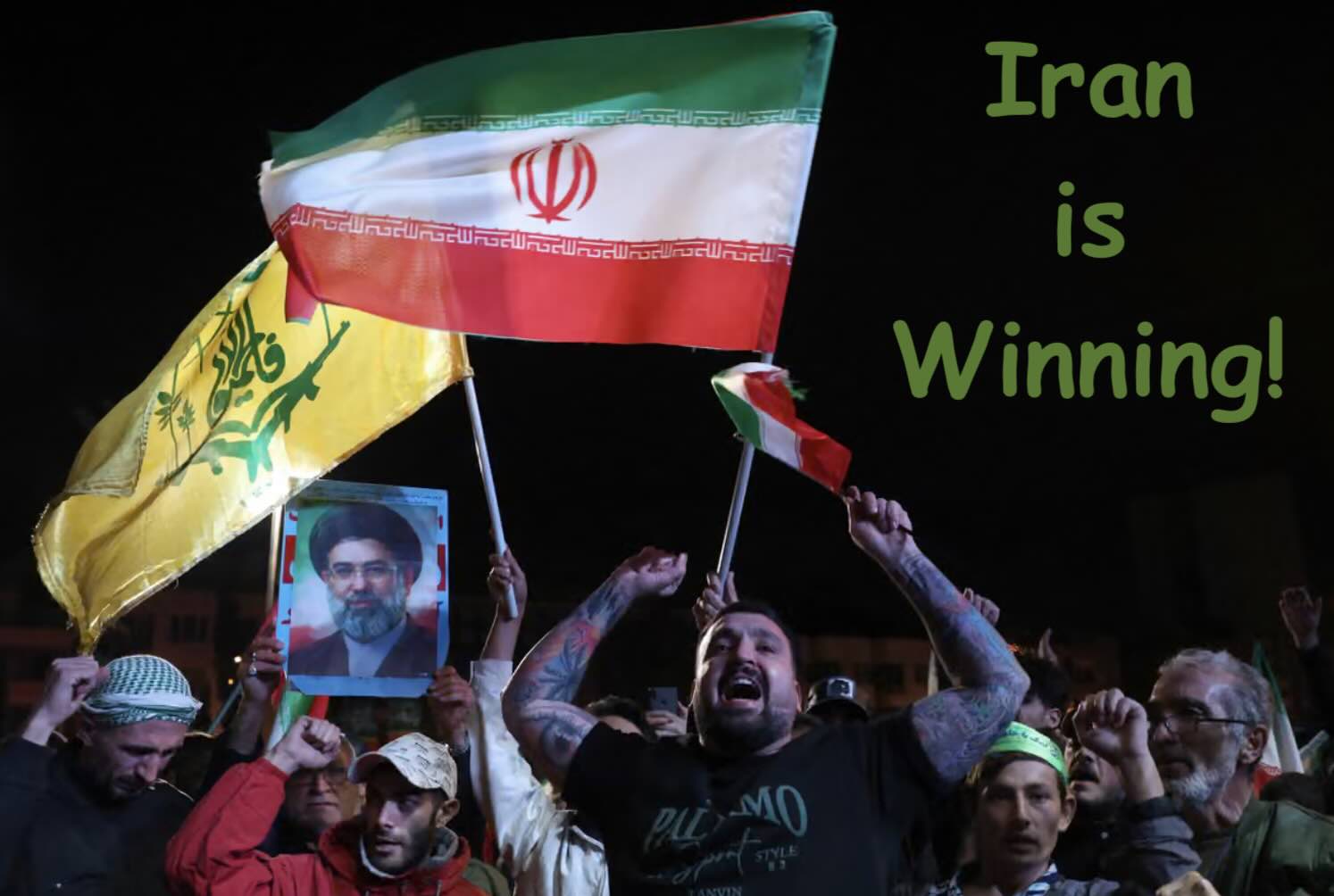
And so now we’ve seen that in the strongest possible way—millions of Iranians in the streets supporting their government, supporting their armed forces, and even coming out and ringing these facilities that Trump was threatening to nuke. I mean, that shows a lot of courage and a lot of devotion. And I don’t think that the West, or rather, the media, is going to be able to fool Western people any longer into believing that Iranians are oppressed and they don’t like their government.
Richie Allen:
Are you confident that the ceasefire will hold, that the negotiations will be conducted in good faith and that a solid agreement will come out of it? Or are you like me, and you worry about a false flag—some big event may be staged by the Israelis, may be staged by the Americans that could derail it—and we might see the bombing of Iran again and the Iranians closing down the Strait again, and the Iranians firing on U.S. facilities in the region?
How confident are you about these talks which are going to, I believe, Kevin, begin in Islamabad on Friday?
Kevin Barrett:
Well, I think that we have more reason to be optimistic than we did in the past after earlier rounds of this war on Iran, because now the Iranians have demonstrated what they can do. And what they can do is stay even with the U.S. on the escalation ladder, and perhaps even stay ahead of the U.S. and win that war of escalation—that anything the U.S. can do, the Iranians can do something at the same scale.
And so this idea that they think the Americans are going to gain something by pretending to want a ceasefire and to want to end the war, get a deal, open up the Strait of Hormuz, and then somehow launch yet another sneak attack that’s somehow going to gain something—I’m not sure how that would work, because Iran clearly controls the Strait of Hormuz. The facts on the ground—or in this case, the facts in the sea—are obvious now.
That is, it’s just a piece of cake for Iran to decide who gets to come through the Strait of Hormuz and who doesn’t. And given that, it doesn’t seem that the Americans—in particular the Trump administration—have much incentive to escalate. Trump has to worry about the coming elections. If the Republicans take a bad enough defeat and Trump is reviled enough, he could easily end up getting impeached, possibly convicted and spending the rest of his life in prison, or maybe even worse.
So there’s not a lot of motivation really for anybody on the American side to try to use this pause to deceive the Iranians and once again launch some kind of sneak attack. What good would that do? The Strait would close again. The Iranians have shown they didn’t even have to use all of their capabilities. They didn’t have to close the Red Sea, which their Houthi allies can do anytime they want. And they certainly didn’t have to utterly destroy the life support infrastructure of the Gulf countries that are occupied by the U.S., which they showed they can do because their rockets can outlast and penetrate air defenses.
So there’s nothing in it here for the Americans. There’s really nothing in it for rational Israelis either. But there might be a few Israelis who still have this notion that if we create a big enough war, preferably World War III, that somehow Israel, with its Messiah in charge, will crawl out from the radioactive rubble, blow up the Al-Aqsa Mosque, rebuild a blood-sacrifice temple, and rule the world, and every Jew will have 2,800 non-Jewish slaves. So there is that messianic, millenarian extremist ideology out of Israel that Netanyahu sort of plays games with. He plays footsie with those people.
And so those people, yeah, you never know what they might do. But I think that the chances that they’re going to blow this up and get the war going towards escalation again are lower than the chances were after the past rounds.
Richie Allen:
You’re listening to Kevin Barrett. Here’s my take—well, I won’t give it to you. I’ll give you the Cliff version of it. I laid it out earlier in the programme. I’ve learned that two, sometimes three things can be true simultaneously.
So I absolutely believe you’re right when you talk about these lunatic Zionists and their Greater Israel Project. For me to deny that would be foolish and I’d lose any respect that I might have with my listeners. It’s absolutely bang on the money. There’s no doubt about that, that this is real. It’s an agenda that’s been there forever—well, through the 18th, 19th, 20th centuries, maybe going back further than that.
But I also laid out a little bit of a theory earlier on, and that is that sometimes it helps to look at the effect rather than the rhetoric. So we know the rhetoric because you laid it out brilliantly earlier on. They said they wanted to destroy the nuclear program, whether weapons or domestic energy. They wanted to destroy the ballistic missiles and all of this stuff. That was the rhetoric.
But if we look at the effect of it, the effect has been a massive global economic shock. And I make the argument quite often on this programme that this kind of disruption, these kind of crises, are not incidental—that one of the payoffs of these huge events is consolidation of power.
Governments gain—somehow they gain the rights to or the justification for bringing in emergency measures. Central banks tighten control over spending, what can be spent and who gets the money. We know the huge corporations do okay, but the small competitors, the high street stores, disappear completely. There is an inflation shock that screws with everybody’s savings. Food prices go up, transport goes up.
And I believe that there is a definitive and fairly visible agenda for a new way of living for humanity where we live in a kind of technocratic world where pretty much everything we do is controlled and monitored. And I see what’s happened in the last few years with the COVID thing and now the genocide in Gaza and now this terrible terrorism against Iran. And I just think—because I don’t believe Trump is making any decisions of his own volition, I think he’s a puppet—I see that what you’re saying is true. I can’t argue with it. But I also see this other thing happening, which is the impoverishment of people all over the world. And I wanted to ask your thoughts on that.
Kevin Barrett:
Yeah, that’s a good point, Richie. I think there’s some truth in what you’re saying about these crises being used by various forces to consolidate their power. And historically, I think we can see that with the way that booms and busts in capitalism—which are natural because bubbles blow up and then they pop—that’s just the natural ebb and flow of the psychology behind money in a capitalist society.
And so that’s always been around. And then certain forces have figured out how to ride those waves and make money on them. And there’s all sorts of evidence that certain big financial powers either knew that the Great Depression was coming or even made it happen or at least made it worse and bet on it and made money on it. A little bit in the same way that somebody knew 9/11 was happening and bought put options on American and United Airlines and Morgan Stanley and these companies that were guaranteed to crash due to 9/11.
So yeah, people make money and consolidate power on crises. They know that there will be crises coming, and then they sometimes manufacture their own crises or intensify other, natural crises. Naomi Klein wrote about this in The Shock Doctrine. And it was funny that she didn’t talk about 9/11, which is kind of the ultimate manufactured crisis designed to bring in dystopia.
So yeah, I think there’s a fair bit of truth to what you’re saying. But I also think that in this particular case, what’s going on is not so much that there’s one group that’s trying to tighten the screws on all of humanity, although that’s possible. But what meets the eye more is that we’re going through a transition geopolitically, which is typical of periods when rising powers eclipse falling powers and reshuffle the power structure to decide who’s going to be top dog and rearrange the pecking order.
There’s often some kind of a war and a crisis. We’ve seen this in the past when the U.S. eclipsed the British Empire with World War II. The British were being challenged by both Germany and Russia, but then the U.S. came out ahead after World War II and emerged with all the power and most of the gold and so on, and set up the United Nations and other institutions to operate in the American imperial interest.
And that worked for a while when the U.S. still had half of the world’s GDP and owned all of the world’s gold. That changed, and now the U.S. manufactures a small fraction of what China manufactures. The global south is rising, and the U.S.-occupied Western empire is falling, and yet we still have these outmoded institutions like the Security Council at the UN and these other institutions that the U.S. created that don’t reflect the global power reality that is emerging.
And so in that situation, with that mismatch between the institutional power and the real power, a huge reshuffling has to happen. And that will bring crises and economic shocks and wars. And somebody’s going to bet on those. Somebody’s going to make money on those. But I think the underlying historical process is more one of a geopolitical shuffle than sort of one particular conspiratorial force being in charge of all of the shocks and consolidating absolute power from them.
Richie Allen:
It’s a great answer. And there’s no winning or losing this. I don’t deal in winning or losing anyway when it comes to debates. You put that very well.
I suppose for me, I just look back to, particularly from 2020 onwards, Kevin, and like you and I would have rubbed shoulders over the years with great people like Jim Mars, for example, and David Icke in particular and others, who were talking about centralized control of large swathes of the planet, of civilization, and that this was a plan going way back in time through secret societies, the Club of Rome, the round table groups, all this sort of stuff.
And I used to listen to this stuff with interest and also with scepticism—it’s healthy to be sceptical and you’re absolutely right as an academic to be sceptical. But I think that when these people were telling me years ago, look, a time will come when it will become very difficult for people to own their own property, and this will be a global thing. It won’t just be a Western thing.
The day will come when the technology will exist to roll out mass surveillance and control. You know, that people will be coerced and encouraged into taking medication that they don’t want all over the world, and that there might be punitive measures introduced if they don’t go along with it.
I look at it and I see whatever happens—whether it’s the mass murder of Palestinians, the slaughter of people in the Middle East—that it serves these agendas as much as it does anything else. I don’t deny for a minute the reality of Iranians, people who want to live in an Islamic Republic because this is what they believe and this is what they like. I don’t deny the reality of the lunatic Zionist mentality that wants to own the entire region and to do the things you described earlier on. These are realities that people are living.
But at the same time, I can see all over the world authoritarianism is on the rise everywhere, where people are being arrested for things they say, where people are being punished for thought crimes, not for actual crimes, where they’re bringing in digital currencies and telling me that I can’t go to Kevin and Rabia’s house and give you a couple of books for that old sofa that you don’t use anymore.
All of this stuff, Kevin—it was creeping, now it’s stampeding. And these horrible things, these mass genocide events that we’re talking about, they accelerate these things. And that’s why I’m not stubborn in my beliefs or my worldview. I see this accelerationism towards this dystopian technocracy, and I see everything that happens feeding into it.
I won’t press this point. You have the final word on that, and then I want to ask you about something else.
Kevin Barrett:
Yeah, I think there’s a lot of truth to that again, Richie, absolutely. I’m very frustrated by it, because I’m old school and I really hate all of this dystopian surveillance and control technology. I didn’t even have a cell phone. I had no portable phone until I moved to Morocco in the summer of 2023. And now with two-factor authentication, I have no choice. I can’t get into my websites, I can’t get into my bank accounts without having a phone.
And what is a phone? It’s a tracking device that also makes phone calls. So it’s horrible. And yeah, it might as well be exactly the way you describe it, frankly.
I mean, what the underlying reality is, I’m not sure. Jim Marrs thought that there were extraterrestrial gold miners who came to Earth and bred the human race and are controlling us secretly or something. And yeah, maybe that’s not impossible. And David Icke has these really interesting ideas as well, and he’s been right about various things. His book on 9/11 is quite good. So, who knows?
But you could also explain this as simply a function of technology evolving, and then the way that people in power choose to use the technology—or are forced to use it to stay in power. Whoever doesn’t use it loses power. Any government that doesn’t seize the technology that’s available to mobilize its population to produce, loses. If a corporation doesn’t use the technology that’s available to mobilize its workers to produce, then those institutions—governments and corporations—lose in the Darwinian competition with other governments and corporations.
People like me—if I don’t use my phone, I lose in my competition with other people who want to have bank accounts and websites. Ultimately, as the technology “advances,” whether that’s really an advance is another question, you could argue that there’s going to be a natural tendency among the so-called self-appointed Platonic guardians of each society to recognize that in a world where possibly every individual who’s clever and has access to stuff that’s pretty easily available might be able to make something really dangerous.
With AI now, maybe it’s going to be a lot easier to make nukes or who knows what else. There are all sorts of rumors about what happens to people who invent “free energy” devices. Who knows if that’s true, but certainly one can see why a rational planner in power might think that we need a dystopian technology total surveillance grid, because we need to know if there’s anybody who might be sneaking into their basement building something that could melt down the entire galaxy or whatever.
So you could see it as an evil plan to impose technocratic control—perhaps some extraterrestrial group or some elite human group is running it, maybe. But you could also explain it as a natural outgrowth of the technology going the way it’s going. And I don’t think it should be going that way. I think we should all say no to it. I think we need to be able to say no to new technologies the way I tried to say no to cell phones, but I’m not having any luck.
Richie Allen:
Civil disobedience. Final question for you today, and it’s only because it’s come up on the programme this evening. I’ve been asked by listeners about prepping, and I just tell the truth—I haven’t done any prepping. Is it something you and Rabia, looking at how dystopian things are unfolding, have you ever given any consideration to prepping?
Kevin Barrett:
Well, Richie, it’s funny you say that because after 9/11, we bought a lot of storable food, and enough other things that we would have had food and water and such, the basics that you would need if there were some kind of civilizational collapse.
And that was when we were living in the countryside outside of Madison, Wisconsin, from 2003 through when we moved to Morocco in 2023. So we spent 20 years and were kind of moderate preppers through all those years.
And when we moved to Morocco, we had all of this old food that we had to get rid of. Some of it was good enough for the food banks, and some of it just basically had to be tossed. And here in Morocco, we’re really not prepping. Been there, done that. We’re praying. We’re praying for a better future.
And frankly, if things get bad enough, I think it’s going to be bad all around. So now I guess you could just say we’re praying rather than prepping.
Richie Allen:
Thanks for coming on today. I share your happiness—or I’d say optimism—that we didn’t see further carnage in Iran last night. I appreciate it. Kevin’s article on this is well worth a read. By the way, go to kevinbarrett.substack.com, subscribe to him there. Always interesting, great take on today’s events, or events overnight and events in the main.
Best to Rabia, Kevin, and thanks again for today. We’ll speak again soon.
Kevin Barrett:
Hey, thanks Richie. Keep up the great work. I love your show.
Richie Allen:
Thank you very much, Kevin. You’re very welcome.
Kevin Barrett live on The Richie Allen: Show for Wednesday.
You’re not going to believe what’s happened to me in the studio. I’ve been holding my microphone during the conversation with Kevin. I don’t know if you know anything about studios, but the microphone I use sits in a shock mount, like a cradle, and it’s collapsed now. Luckily enough, I always have a spare, but I’m going to have to take a tune—and a particularly long tune, funnily enough—while I try and sort it out.
It’s hilarious, actually. Just as I was speaking with Kevin, the microphone completely collapsed. Luckily enough, my fader was down. It was in the down position. And so I’ve been holding it. You can hear me holding it—it’s very noisy. Jesus.
I’m not going to tell you—it’s a Neumann U87, by the way. Of course, only the best for the BBG. Music from Bob Dylan while I try to make running repairs. If only there was a webcam. Yes, if there was a webcam, you’d be able to see the state of me right now. This really looks like amateur radio, this.
13 and a half past six. Music from Bob Dylan on The Richie Allen: Show.
The time is coming up for 18 minutes past six. Thanks again to Kevin Barrett and to Neutral365.com. I’ve had a bit of malfunction here in studio and I can’t fix it easily, so I’m just going to have to call it a day, really. Sorry about that. It’s going to take me about 15, 20 minutes to sort it out, so there’s not much point to me coming back.
I think we’ve had the news roundup and we had a good chat with Kevin. I think that’s going to have to be it for today. Sorry about that. The programme will be back tomorrow at five o’clock UK time for Thursday’s edition of The Richie Allen: Show.
And it’s never happened to me before, this. It’s hilarious—just a big collapse of a shock mount. It’s just broken in pieces. The microphone is all over the place. I’m holding on to it. It’s going to take a bit of time to fix. Nothing I can do about it.
So look, thanks for listening today. Sorry for the early bath. Sincere apologies. We will do it again tomorrow, as I said, at five. Thanks again to Kevin Barrett. It’s truthjihad.com—that’s his website—and kevinbarrett.substack.com.