
Rumble link
People ask: Was it worth coming all the way from Morocco to New York City to attend the 25th anniversary 9/11 truth conference “Turning the Tide”?
If Trump’s ICE goons had grabbed me at the border and disappeared me into Alligator Alcatraz, the answer would have been “no, not really.” Fortunately that didn’t happen.
I flew into an airport named after a president who got his brains blown out by the Israelis and their “American” kosher nostra friends…along with a few WASP turncoats like Allan Dulles, who also has an important airport named after him.
The good news is that I walked right into the USSA without even showing a passport. The bad news is that I didn’t have to show a passport because Border Patrol’s facial recognition pinged me, and they apparently already had a digital version of my passport to link it to.
For some reason they let me enter the USA even though I am a longtime, outspoken fan of Hamas, Hezbollah, Ansarullah (better known as the Houthis)—and of course the Islamic Republic of Iran. Normally, when you openly and outspokenly side with “terrorist” groups and countries your government is at war with, and losing to, you expect some official pushback, or at least a “step aside, and please tell us what you’ve been up to since we last interrogated you at the border two years ago.” But this time they didn’t even interrogate me. I guess I need to work harder.
Back in the land of the free, I found myself free to attend the 9/11 conference and participate in “The Early Years of the 9/11 Truth Movement” panel. And yes, it was definitely worth it. I loved reconnecting with so many friends and colleagues—and meeting several online friends in person for the first time, including FFWN co-host Wyatt Peterson, Joe F. with the Iranian food, and many more.
It’s been decades since I had any interest in rock stars. But seeing Roger Waters making the connection between the 9/11 false flag op and the genocide in Palestine was…intense. His music formed the audio backdrop for the event, with the highlight being the “Shine on You Crazy Diamond” theme played during the in memoriam tribute to fallen 9/11 truth warriors. You can watch and listen to that segment at the end of the video posted above. .
Another famous name, Jimmy Dore, performed the GOAT of 9/11 truth comedy routines, starting with: “I’m loving this conference. I’ve seen so many great presentations and I’m as giddy as a dual passport Israeli on 9/11. I’m so excited I feel like dancing suspiciously…”
Watch the Jimmy Dore segment on YouTube
9/11 truth advocates have long been magnets for ad hominem attacks, as I know from personal experience. The ADL is still insisting we’re all damnable antisemites. They’re not quite as wrong as they were 20 years ago, when none of us could figure out why Zionists thought it was antisemitic to blame Bush, Cheney, and Rumsfeld for 9/11. Today, in 2025, the vast majority of the 9/11 truth community looks favorably on arguments that Israel did it, and more and more are openly embracing that position. The fear of being called names is wearing off.
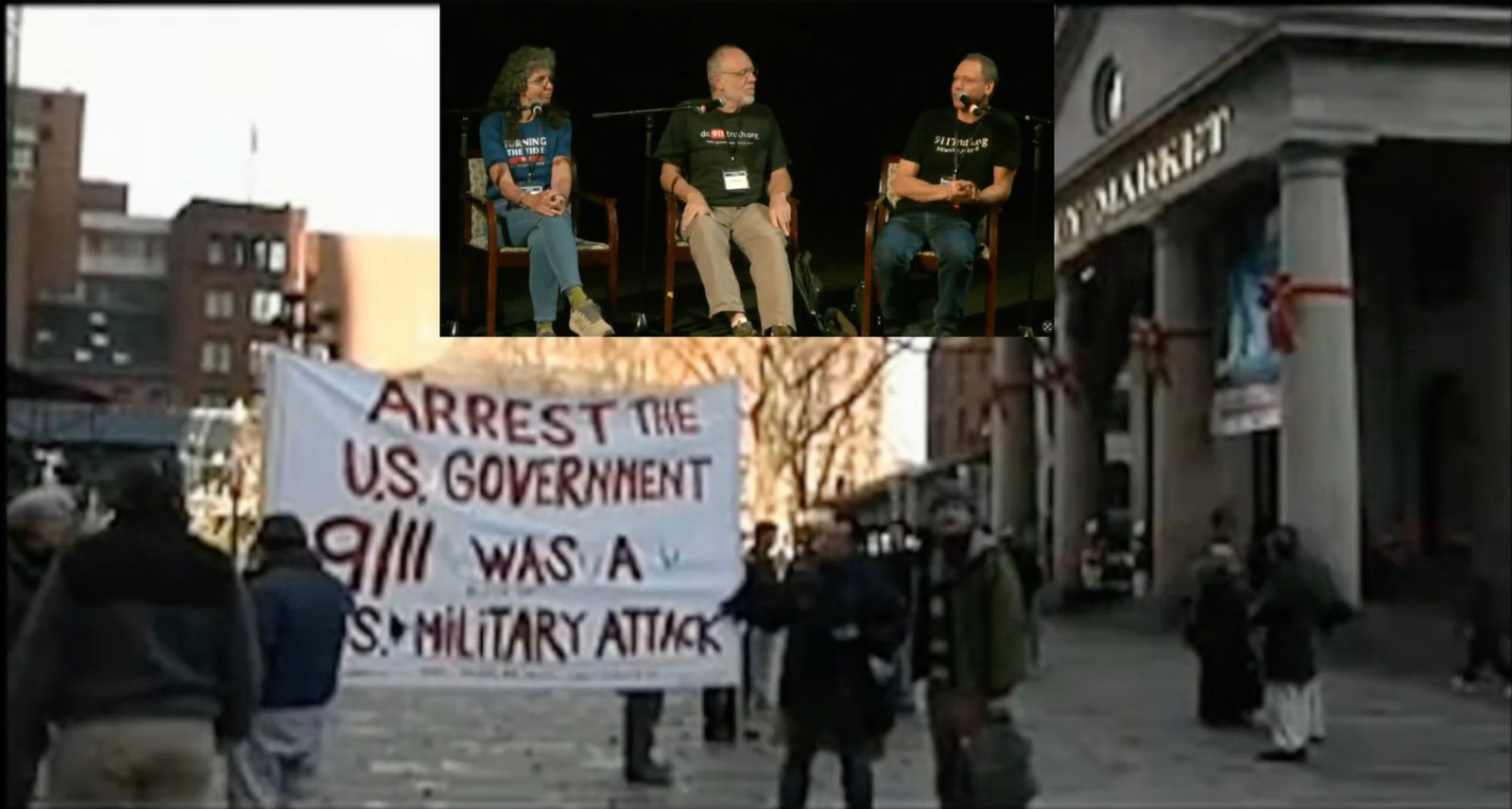
I discussed that kind of pushback during the panel discussion. Watch it above, or read the transcript below.
-KB
PS A huge thank you to the people who put in so much effort organizing this fantastic event.
The Early Years of the 9/11 Truth Movement (transcript)
And then going down the line next to him is Kevin Barrett. He’s one of the brave academics, one of the first ones to step up, question 9/11 truth, and has continued to do so over the past two decades, also hitting that third rail of the Israeli subject time and time again. We thank you for that, Kevin.
Carol Brouillet, another person I highly admire and look up to. She’s been around four decades. She’s an activist, an organizer, a mother of three. She began working on 9/11 Truth in the wake of the event, organized street actions, marches, meetings with senators and her congressmen, demanding an investigation of 9/11 as early as 2002. Here we are on the 25th anniversary, folks! She published and distributed millions of deception dollars, organized many events including the San Francisco International Inquiry into 9/11 in 2004, and she co-founded the Northern California 9/11 Truth Alliance in December 2002. It’s the longest active local 9/11 truth group. Let’s give it up for Carol.
Barbara Honneger is a board chair of the Lawyers Committee for 9/11 Inquiry and from the day of 9/11 has been a researcher, author, documentarian, and public speaker focusing on the Pentagon and the anthrax attacks.
Ms. Honneger previously served with the Reagan administration as a White House policy analyst. Special Assistant to the Assistant to the President, and the Director of the Attorney General’s Law Review at the Department of Justice from 1995 to 2011. Barbara was the Senior Military Affairs Journalist at the Naval Postgraduate School. Let’s give it up for Barbara.
And then we have Les Jameson. And I’m very pleased to say that my very first 9/11 Truth activist meeting was right here in New York, put together by this man sitting next to me. And he became a full-time 9/11 activist in 2003, helping to launch the 9/11 Truth Movement in New York City as well as nationally. He did weekly outreach at Ground Zero and many other city locations for many years. Les attended 9/11 Commission and NIST hearings, where he saw firsthand the scope of the official cover-up. He has written many articles on 9/11 and given many presentations with broad overviews of the range of evidence disproving the official narrative.
He was heavily involved in producing many large 9/11 events over 15 years, including a few that led to the formation of the Lawyers Committee for 9/11 Inquiry. Let’s give it up for Les Jamieson.
We’re going to start with you, Les, and then move on to Barbara. What initially brought each of you into the 9/11 Truth arena? What was it that said, this doesn’t make sense and I need to do something about it? Les?
Les Jamieson: The day of 9/11, I felt something was not right. There’s no way that this scale of attack could happen without the knowledge of our multi-million, trillion dollar defense establishment. That didn’t sit right with me. So that just stuck there.
And then about two months later, I was listening to a show on WBAI, It was called Taking Aim. Ralph Schoenman and Maya Shone were the hosts. Ralph Schoenman was a walking encyclopedia of global justice movements. He went into this huge expose about the background of the 19 Arabs that were purportedly behind it, and Bin Laden, and so forth. My gosh, that just opened everything up. And then shortly after, I received an email that I think was one of the first viral emails from Mike Ruppert. It was about the CIA. He had an intelligence background. And it was all about, “If the CIA did not know about this, you’ve got a lot of explaining to do.” And it just went from there. I just kept doing research, and then somehow across my radar screen came information about some guys downtown at Ground Zero. They had the first sign that Mike had a picture of, the big red banner, “Bush Regime Engineered 9/11.” And that very Saturday, I had to go. So I went down there, and that was the beginning of years of weekly trips to Ground Zero and many more locations throughout the city. And so it was just a compulsion that started right from day one, actually.
Jason Bermas: All right. Barbara, how did you get involved in 9/11 Truth?
Barbara Honneger: Well, like Les, on the very day of 9/11, I was working for the Department of Defense. I was at the Naval Post Graduate School in Monterey, California. I still live in the Monterey Peninsula of California. And I was the senior military affairs journalist there. Now, the Naval Post Graduate School is billed by DOD as the premier science, technology, and national security affairs graduate research university of the Department of Defense. So it was a very high-level job. I was in that job for 16 years, 11 of them 9/11 and after, until I retired in 2011.
So on the morning of 9/11, I went to the gates, because the Naval Post Graduate School is a very high-level university for mid-career officers from all of our military services, and so it’s a military base, even though it’s a fine university. So I got to the gate, because you have to check in with your military ID, and to my surprise, instead of the normal guard at the gate, it was the public affairs officer, who was my boss. And he said, Barbara, you can’t come in today. I said, what do you mean? With the time difference relative to New York, everything had already happened. I got there at about 11, a little bit before noon, East Coast time, and I had no idea what had happened.
So anyway, he said, “you can’t come in, we’re at war.” Now that’s very interesting, because I happen to know that the Defense Language Institute, which was just up the hill in Monterey from the Naval Postgraduate School, it’s an Army base versus a Navy facility that I worked at, for some reason about exactly a week before 9/11, they closed the gates, both the Navy School and Defense Language Institute of the Army. They were open gates for years. And suddenly the gates were closed and there were guards at the gates. And that was a week before 9/11. Something was about to happen. That was my first inkling that they had pre-intelligence about that. So I was not allowed to come in the gate. He sent me home. He said, I’ll call you in the morning, see if you can come in. And I did go in the next morning.
But the most important thing is that as soon as I got home, and I walked in the door to my mother’s home, which was closer than mine, and she was just having her coffee, and I said, Mom, turn on the TV. The public affairs officer at the Navy base just said we’re at war. And she laughed.
Anyway, I went in and turned on the TV just as the ad nauseum replay of the second plane hitting the second tower was playing. And the moment I saw that, the moment I saw that, and if you’re interested later, I can tell you how I knew from my previous experience that led to my book, October Surprise, on the true story of the Iran side of Iran-Contra, which had already been published in1989. But I just knew. My journalist’s notes told me, this is not what they’re saying on the news that Osama bin Laden did it. This is not true. It’s absolutely not true.
And from there, and I’ll end with this. The very next day I went back and at every one of my breaks, starting the day after 9/11, I used every one of my breaks to research online what really happened about 9/11. And I became a member of the first online group for people that Mike Ruppert and myself and many other people were on. And I was doing that at my job during my breaks for 11 years.
You know what’s really interesting about that Monterey school that you just discussed, shortly after 9/11 you had Lieutenant Colonel Stephen Butler, who was the Vice Chancellor for Student Affairs, who did a write-up in the local paper alleging that the Bush administration knew the attacks were coming and allowed them to occur so they could have this war on terror. And then on top of that, there were several media reports that (alleged hijacker) Saeed Al-Ghamdi, I believe in particular, may have actually trained at that school. He was at the Defense Language Institute, and so he was at the Institute, the Army facility in Monterey, that had closed its gates a week before 9/11, and that’s what he had put together.
Jason Bermas: Extremely interesting. Again, you’re a pioneer in this. How did you get involved?
Carol Brouillet: I’m from the opposite side of the spectrum that Barbara came from, as far as my background. I was an activist since 1992, when I saw the film JFK and I plunged into that. And I was just sort of horrified once I looked at what the CIA was up to, and I became very, very active.
So actually on the evening of September 11th, I was trying to choose whether to get the plain gas masks or the sequined, less scary gas masks for the major protests that were scheduled for Washington DC that September. And our affinity group, we were going to protest the IMF and the World Bank.
I don’t watch TV. I stopped watching TV when I was a teenager. And the only reason I turned on the television that day was I called up my son’s friend’s dad to say, oh, can Sam come over and play this afternoon? And he said, turn on your television. They’ve hit the World Trade Center.
And I turned it on, I was utterly horrified. And what scared me the most was the beating of the drums for war.
So the IMF and the World Bank protests were cancelled. And this is when the anti-corporate globalization The movement was going very, very strong. We had shut down Seattle. There were huge protests in Italy and in Quebec. I helped organize to get North Americans to the first World Social Forum in Brazil. We were on such an upswing, we were thinking, well, when we take over those IMF buildings, we’ll just turn them into daycare centers, right? And have it serve human needs, not human greed.
So our affinity group had our airline tickets, and they shut down Dulles Airport, so some people couldn’t go. But a lot of us went anyway and protested an impending war. We gave flowers to Barbara Lee. She was the only one who stood up against the Bush administration’s call for carte blanche on military action.
And we lobbied against the Patriot Act. This is normal activist stuff. And then when I was on my way back to California, I was sitting next to a woman who had gone to a conference on appreciative inquiry. And when I was in Brazil, I had talked to people who had done really fantastic non-violent work.
We had such a brutal military assault, I thought, on our public mind, and what scared me the most was beating the drums for war. And I thought, what is the most nonviolent response to this? And so I ended up starting a listening project, actually in October 2001, asking people questions about 9/11, what they experienced, what they felt, how they felt about the U.S. government’s response, how do we defuse terrorism? And how can we create a safer, better world for our children and all children? And that was… I mean, I was just a mom. I baked cookies. I had cookies. And I printed out articles from the Internet, the best ones that I could challenge the official narrative. And that sort of helped me to… I didn’t know where to start a conversation. I’d find out what people knew, what they felt, and begin things. But in California, we weren’t as traumatized as the folks in New York City. And we had Mike Ruppert come out and speak.
Before 9/11, my major issue was monetary reform. And so I knew Michel Chossudovsky’s work at Global Research, a great resource. And so he wrote an excellent article exposing Osama bin Laden. And the stand down of the planes, it had all the fingerprints of a special operation.
So I made banners and I worked with a Canadian artist who came up with the deception dollars. But that was my beginning.
Jason Bermas: You know, it’s funny you mentioned the deception dollars, because a lot of people ask, well, how did this get out there before social media in the early web? And it was really viral on the ground, and those deception dollars were everywhere. Not just in hands, either. They were online everywhere. So, Carol, again, what a great idea, and what a way to make people, say “oh, it’s a little bit of money,” and then, “wait a minute,” and take a better look. Kevin, I mentioned you were one of the first academics, and if my memory, which isn’t the best, serves me correctly, I believe you were one of the founding members of Scholars for 9/11 Truth as well. How did you get involved?
Kevin Barrett: Well, on 9/11, I was teaching a folklore class, and it went from the lecture to the discussion. During the lecture, something came up: “Oh, something’s happened in New York at the Trade Center.”
So I went to the discussion, and the students were all looking at their phones. And I said, what’s up? And they said, “the The South Tower collapsed and there are planes hitting the Trade Center” and so on. And I said, “that’s interesting.” And somebody said, “I think they’re blaming Al-Qaeda or something.”
This would have been like an hour or two after it happened at the latest. It was the morning in Wisconsin. And I said, “really, they’re blaming Al-Qaeda? That’s interesting. That was created by the CIA. It’s this CIA database of the Mujahideen fighters that they organized to fight the Russians in Afghanistan.” And the students said, “really? What are you saying?”
And I said, “It sounds like, from what I’m hearing, there’s going to be one huge beneficiary, and that’s going to be Israel.” And they all kind of said, really? And then I said to myself I’d better shut up. So then I shut up. And I went home.
But unfortunately, I was at that time very, very busy finishing my doctorate, and I had to finish my dissertation. So I kind of kept peripheral vision on what was going on with 9/11 research. I got viral emails from people like Mike Ruppert and so on and saw enough to see that this whole thing stank to high heaven.
So I didn’t believe a word of it from the beginning. But basically I was thinking, “we’ll probably really never know. It’s like JFK.” I spent two decades of my life from high school on spending a lot of time trying to wake people up about JFK, you know, on the side (of other endeavors).
So I said, I’ve just got to finish this dissertation. So I didn’t focus closely. And then in December 2003, after I finished grading exams, I suddenly heard David Ray Griffin was going to publish a book about this. “David Ray Griffin? Wow, he’s one of the smartest guys out there. He’s the guy that you want to find out about the empirical reality behind whatever dispute, whether it’s the Big Bang Theory or whatever, he can get himself up to snuff on that in six months and host a conference.
So, “really? David Ray Griffin? What’s he going to be saying?”
“He’s going to be saying that it wasn’t hijacked planes at the Pentagon and they blew up the buildings in New York. “Really?” Because even I thought those rumors I heard about that were probably a little far out. I looked into it and, oh my goodness, it didn’t take very long to figure out that David was barking up the right tree. And that blew my mind. And so I went ahead and finished that dissertation, got my doctorate six months later, and then started doing teach-ins as I did part-time teaching at Wisconsin.
And then hosting David Ray Griffin in April 2005 at the University of Wisconsin-Madison, the first big media coverage of 9/11 Truth. C-SPAN came to cover it, became a very successful event. And then one year later, with 911truth.org, by then I’d started the Muslim-Jewish-Christian Alliance for 9/11 Truth. We teamed up with 911truth.org to do the Chicago conference, Reclaiming Our Future, which really was a mega conference, like over a thousand people. Mainstream media had to cover it, more mainstream media coverage.
And by now, I was earmarked (as a 9/11 truther). And one month later, I got ambushed on Hannity and Colmes. Sean Hannity said, “most people think you’re a nut. We don’t think extremists like you should be polluting the minds of the youth of Athens” or whatever. And I yelled back at him, “Fox News is the biggest bunch of extremists on the planet.” And that sealed my fate. So I’ve been an independent scholar, researcher, and broadcaster pretty much ever since, because I’m unemployable in the Western academy, and my family didn’t want to move to the non-Western academy. So here I am.
Jason Bermas: All right. Before I go to you, Mike, Several of you have now mentioned Michael Ruppert and you did in your presentation. For those not familiar with his work, he did a lot of the really great early work on the drills surrounding 9/11, both before and on that day. And sometimes people’s work survives past the person. I would encourage people to check out Crossing the Rubicon. So Mike, how did you get involved?
Mike Berger: Well, I grew up in New York, and I got a call that morning, and a friend said, turn on the TV. I saw the second plane hit.
I had my own business. I had 12 people who were depending on paychecks, so I didn’t really think about it. I just thought it was blowback.
And in March of 2003, I don’t remember how I came across people online claiming that sophisticated investors had foreknowledge because they had purchased put options. And I was familiar with financial markets. And at the time, the Chicago Board Options Exchange, since it was new to the web, you could access their data for free.
I looked at American and United puts, bets that the stock would go down, and I compared it with all the other airlines. They were the only ones that had significantly large bets. And then I noticed the same was true about insurance companies and the reinsurance companies.
And that’s kind of how the rabbit hole opened up for me. And then, of all places, Kansas City, Missouri had a very, very active 9/11 group. And that was due to a guy named Bill Douglas who came to an anti-war meeting that Janice Matthews was at and said, I’d like to talk to you about 9/11.
And it was in the middle of the winter, and they said, if you wait until the end of the meeting, we’ll listen. And then when the meeting was over, they all put on their coats and left, and Janice said, what did you want to talk about? And that was how I think she got turned on pretty early.
That group organized a lot of street actions. And then they brought Ellen Mariani (who refused the hush money that almost all survivors took, and instead sued suspected 9/11 perpetrators) and her attorney, Phil Berg, to speak in Kansas City. So I borrowed a video recorder and drove to Kansas City and went there and recorded it and then went out to dinner with them. And that was basically how I began to connect.
And then Carol held the first International Citizens Inquiry in San Francisco. And I went to that and that’s where I met. Ken Jenkins, Michael Rupert, Paul Thompson, Kyle Hence, Ralph Schoenman. I met all these amazing people. And that was my entree to this whole ecosystem of people, and from there everything accelerated pretty rapidly.
Jason Bermas: Just before we move on, I’d just like to share my own story on how I kind of came into 9/11 Truth. On the day, I may have had questions, but I certainly turned into a 24/7 news junkie. If you guys don’t remember, they literally took over every television channel, so it was all news.
And when that ended, about a week and a half, two weeks after the attack, I was all over 24-hour news. It wasn’t until there were trickles of stories out there that kind of made me question it, and the idea that we were going into Iraq.
But what sealed the deal for me is that I had gone back to my old high school to play a men’s night basketball game with a couple of friends that had now become teachers. And this is a very small school. This is a middle school to high school. I graduated with 54 kids.
And I walked into my old locker room where I’d suited up for all these different games and sports activities, and in the urinal— you can look this up online today—was Osama Bin Laden’s face. And it said, Operation Enduring Freedom. And I was peeing on Bin Laden.
And I had gone through the tail end of the Cold War, done the duck and cover drills, and I thought to myself, you know, I never peed on Gorbachev. This is really weird. And these are really influential kids. I was determined that night just to find a timeline. I wasn’t looking for anything conspiratorial.
And I found a site called 911timeline.net, still up, Mark R. Elsis. And I printed it out because I didn’t want to read it on a CRT screen. It’s like 40 pages. And I am just horrified again and again. And he’s got links to all these other stories. And that really set me on my journey. And once again, I don’t know if Mark is still around, Love Earth Network, but that work still survives today. And I think that’s why it’s so important for us to continue to put this stuff out so that people can look at it historically and hopefully make better decisions, have better discernment with these large scale events.
And speaking to that, let’s go down the line again. There was certainly a stigma for 9/11 Truth very early on that is not as heavy today. We’ve reached that pop culture moment, but certainly with friends, family, I had people that didn’t want to talk to me. I had people that just knew who I was from the movement, want to physically attack me. I got followed home a couple times in New York. That’s over with (now, in 2026). If somebody disagrees, they’re just dismissive or want to crack a joke.
I’m wondering, with all of you, what was that stigma like early on within your family and friends network, Les?
Les Jamieson: Just a quick aside, it’s not over. I was at Ground Zero yesterday (the 11th) and got in about four arguments. It was fun. It was actually fun because you just keep at it, giving people more information and questioning them until they finally can’t answer. Anyway, I totally agree. We are in a different stage.
I saw from early on through five years, 10 years, 15 years, how much we were permeating public consciousness and how many people we would encounter that were already there. So, yes, the stigma had, for me, most to do with the effort to try to interrelate with other organizations, to create coalitions to bridge with the anti-war movement.
As a matter of fact, if we did a publication prior to social media, we did these handouts like this. This was called The 9/11 Truth Reporter. I have it from 2006, and my article was here, Why 9/11 is Ground Zero for the Anti-War Movement.
So the stigmas and the obstruction was coming from groups that I felt should have organically resonated with this information and wanted to—you would think their efforts to call attention to the disappearance of our privacy and of our civil rights, constitutional rights, the Bill of Rights, things of that nature.
You’d think that they would come on board and say, “of course, 9/11, Patriot Act, we got it. Let’s organize.” No. Instead, we got obstruction from pretty much every organization. There were anti-war groups, at least four here in the city. And we would show up at all their protests with our signs. Mike had several of those photos up there.
And we would go to their meetings. And it was pretty stunning, the obstruction that we would come up against. I reached out to leaders in the anti-war movement. I remember contacting once the great historian Howard Zinn. “Howard, look at this evidence. We’re working towards a true, authentic investigation. Can you come on board?” “No. We have to do something about the Iraq War.” So, again, what was driving the wars—I’ll definitely speak for myself: If you want to end wars, if you want to address social justice issues, 9/11 is the comprehensive solution to all of them. We’re not going to have economic justice, environmental justice, civil rights, voting rights, all of these things, you’re not going to have them. Because events such as 9/11 shows how the power structure in this country and around the world is just dominating and tightening its grip on our freedoms.
The stigma, again, goes back to the obstruction, I think, that we experienced trying to coalesce with other organizations to build and broaden this whole effort.
And then getting to politicians, that was a big stigma. We met once with Carolyn Maloney, Congresswoman in the city, and talked to her about Building 7. That didn’t go very far.
Also, certain media, even alternative media, would not take this on. Luckily, a few did, Ralph Schoenman, Gary Null. Also, we had INN World Report here, which is a national half-hour cable news show that Lenny Charles and Tom Kiley led. So we did have enough, and we just kept going, kept going.
And in terms of the stigma and the obstruction, we got good over time at addressing people’s issues and questions and also understanding their mentality, their frame of mind, because there’s different levels of capacity for people to take on an issue of this magnitude. And we got good at navigating that, and we just kept going.
You mentioned the early days of the alternative media. There really were only a handful of outlets at that point. Obviously, you know, props to InfoWars. I know Alex Jones is a stigmatizing character even to this day, but they did a lot of pioneering work. And then Guerrilla News Network, GNN. A lot of people forget about them, but a lot of the early stuff I saw there.
Jason Bermas: Now, Barbara, as far as the stigma goes for you, it probably is a little bit different, because you worked in the upper echelons of government in your career, so you’re surrounded by a lot of these people that are more than likely invested in that official narrative.
Barbara Honegger: Big time, yeah. If I may, because we’re talking about the early history of the movement, I would like to correct something you said earlier. You mentioned Mike Rupert’s book, Crossing the Rubicon, and chapters 19 and 20 in his book are on the war games. If you read the acknowledgments, he thanks me for the Holy Grail of giving him that.
Jason Bermas: Excellent, excellent.
Barbara Honegger: Just to correct the record. Okay…so my situation, I’m still trying to understand it. Because I was the Senior Military Affairs Journalist at the top Military Affairs and National Security Affairs University for the entire Department of Defense. Even though it’s a Navy facility, the Naval Postgraduate School, it’s for the whole DOD.
And I had already been there five or six years when 9/11 happened. So the mystery is, as I mentioned before, from the very beginning, from the day after 9/11 when I went back, I started not only investigating 9/11 and being on the mass website for the very first people who were going back and forth, like two HALC computers in Space Odyssey. Mike Rupert was one of them, I was one of them. That’s how he learned about my war games work, through that website. Or through that email thread.
So, the strange thing that happened is that just because who I am—I came out of the womb as an egalitarian, not an authoritarian. I hate authority. Now, that may surprise you that I’d be working in DOD, but I did, because it was the best possible job you could ever have, and I was very good at it. So, while I was at the Navy School for 11 years, I was public on 9/11 Truth. I went on public access TV. I ran for Congress twice on 9/11 platforms. I was covered positively in our local media. Once you run for Congress, you’re quasi-official. And so mainstream media wants to be quasi-official. And so they covered me respectfully. They covered the information respectfully.
But the mystery is, why nothing ever happened to me? And I finally think I figured it out, and I’ll end with that. Well, I’ll end with two other things. I think I finally figured it out, but I still don’t know for sure. But I believe that it wasn’t long before, because of my position, the very highest level people in the military in Washington, D.C., in the Pentagon, they wanted to get out of the swamp. And so they would fly on taxpayers’ dollars on a military plane, to Monterey, and they would give the superintendents the admiral’s guest lecture. And I was a senior journalist, so I was always assigned to interview them.
And I would interview them all, one-on-one in the admiral’s conference room. And after I did my job interview, I would take that hat off, and I would say to General Ralph Eberhart, the head of NORAD on 9/11, was one of them. Him and me in the admiral’s conference room, doors closed.
And at the end of my formal interview for my job, I would say, I’d like to ask you for permission if you can give it. I’d like to take my work hat off, and I would like to ask you questions about your experience on 9/11 as an American patriot. And to the person, the Director of Intelligence for the Navy, Naval Intelligence, Ralph Eberhardt, head of NORAD, the Assistant Secretary of Defense for Special Operations, before 9/11, on 9/11, and after 9/11. I interviewed all of those people. They all told me their experience and their truth. And I published it in the Pentagon Attack Papers, which was republished in Jim Marrs’ books on 9/11. You can see that in the appendix.
So I was doing all this while I was in the job. And my public affairs officer knew I was doing this. And I was not touched. So I asked myself, why? And I think I know the answer. In my research, I very quickly discovered, interviewing Admiral Hathaway, who was the Admiral in the Naval Command Center in the Pentagon on 9/11, I learned that the official story in the 9/11 Commission Report, which didn’t come out until later, but I learned that when the 9/11 Commission Report came out and I read it, I said, just a minute. They’re saying there was only one person who survived the Naval Command Center, two rings in, into the Pentagon. No, he told me that almost everyone survived there because it was a bomb-proofed room. And so I realized, oh my god, there were preplaced explosives inside the Pentagon, just as there were preplaced explosives and incendiaries at the World Trade Center towers and World Trade Center 7 on 9/11. And so I started doing that research and putting it out. And I believe that the reason I wasn’t touched is because the Navy knew that. And they couldn’t keep their jobs and say it inside the Pentagon, so they protected me.
Jason Bermas: So before we go on to Carol, you just mentioned Jim Marrs. He’s another person we should actually acknowledge. You mentioned the JFK film from ‘92. Well, Jim Mars did the book Crossfire that a lot of that was based on, and Oliver Stone had reached out to him in that film.
Carol, you’re kind of the opposite. You’re not a government person. You’re around all of these activists and anti-war people. But I would imagine there still was that stigma, because I had those friends as well, and they didn’t want to hear 9/11 truth. So what was it like for you?
Carol Brouillet: Well, actually, it was very challenging because most people did buy the official narrative. And so my listening project was sort of a gentle way to find out what the public was thinking, how they could respond to the information. And I actually did get some very positive press, just as a peace activist.
I think I didn’t get vehemently attacked as a conspiracy theorist until we did the San Francisco International Inquiry into 9/11 (in March 2004). We started raising some questions.
But you mentioned Guerilla News Network. Kyle Hence did just phenomenal work with John Judge. He actually helped me raise the money for the first batch of deception dollars that we published. We held our 22nd annual 9/11 Truth Film Festival in Oakland just recently. We dedicated it to Kyle Hence because he did pass away just this last December.
The stigma, the term conspiracy theorist, I think one thing that helped us was where we were, in the Bay Area, because we were far from Ground Zero.
Kyle did the first press conference at the National Press Club in, I think, June 2002, and he hired them to just film it and to make a film about it. And then there was a disagreement and they decided, we’re going to do this on our own. And they made Aftermath, Unanswered Questions from 9/11. And Blaine Mahan, the artist for the deception dollars, made this giant poster for it and it had all the questions. And we had a lot of people on board with Northern California 9/11 Truth. Our meetings had 75 people. We made these giant movie posters. We plastered them all over San Francisco. We filled the Herbst Auditorium with almost a thousand people. We had to turn 300 people away. We had Mike Ruppert, we had Barry Zwicker, we had all these fantastic panelists, standing ovations, and not a word in the press about that entire event.
But when you have 900 or 1,000 people, suddenly it was okay to talk about 9/11. And I think that was a huge breakthrough for us in the Bay Area. And still, I think what the psychologist said, people lost their marriages over 9/11. It was very difficult for people with clashing worldviews.
And when I started the Northern California 9/11 Truth Alliance with Ken Jenkins, back in December 2002, at the same time they started one in New York, that was sort of the birth of the 9/11 Truth Alliance. Kyle Hence was very instrumental in that.
I think of it as sort of like a support group for activists, because I think we need this spiritual community to help us, to know we’re not alone, we’re not crazy, we have this important information, we need to raise public consciousness.
My husband still doesn’t get 9/11. When I start trying to talk to people about it, he’s like, shut up, shut up, Carol. And so that’s what I have to deal with. But, you know, my husband loves me, he supports me. I’m only here because he gave me a generous birthday present so that I can afford to come to the conference.
But it’s changed over the years. Like when I was at the beginning of the Listening Project, which I did for over a decade, people would come around, they’re like, “you were right!” And they started joining me, and I saw the shift in public opinion. So it is gratifying to see people wake up.
And now, I’m not really shy about it. Talking about 9/11 with people who have been utterly clueless, I just give them the best information, honest information, and I get their response, and I just respond in a very human way. And I think that’s the best we could do.
We can listen people, we share our truth, and we have to be honest and truthful and sincere. And I think that’s the important thing, to make those human connections. Tabling, those passing out flyers. Ken’s here. Remember when we were talking to Jim Hoffman? And he’s like, “what is this about?” And he went on to create the great WTC7.net site and did all this fantastic work on Building 7.
And I must say, too, when we talk about the magic number, how many people do we need? What percentage of the population? And Ken has said, One is the magic number. And you have to remember that every time you meet a person and you talk to them, you can change their life, transform the world, you know, one person at a time.
Jason Bermas: Kevin, you come from the university arena, so everybody thinks they’re the smartest person in the room. What was that like? Was it O’Reilly or Hannity said that?
Kevin Barrett: Actually, I faced different kinds of resistance in different areas of my life. And it was very different in the academy. Every single colleague with whom I discussed this right up until the thing exploded with my Hannity appearance in 2006 gave me pretty much the same reaction, which was, “well, you know, Kevin, you could be right, But I don’t want to look into this because you could be right.”
So I didn’t meet a single closed-minded person among any of my academic colleagues that I knew. And in the world of Muslims in Madison, Wisconsin—because I converted to Islam in 1993—and so I’d go to the mosque, and I know these people and I know their little factional disputes between the Sufis and the Saudi Wahhabis and all this stuff. And every single Muslim in Madison, Wisconsin, from day one, from the moment they heard about it said, “This is some kind of inside job. This is nonsense.” So they all knew that. And all the Middle East studies people pretty much also knew that, at least the ones I knew.
Like, what Al Qaeda? It’s infiltrated, made by the CIA, and all this stuff. So there was not much resistance really inside the academy itself. And then even after I got witch hunted by Fox News, and tremendous political pressure was put on the university to get rid of me, they still wouldn’t get rid of me officially because they couldn’t.
They had no reason to. And privately, they were very sympathetic. And then in terms of the local media, I had closet supporters at Channel 3, the owner and operator and main voice of Channel 3 CBS Madison, Wisconsin. Neil, bless him, was a closet supporter. He once said, after our TV interview: “Do you think we’re ever going to get those bastards?” Off camera, of course.
And then John (Nichols), what’s his name, from the Capital Times. He was a closet supporter too. So there was a lot of areas where there wasn’t much pushback.
The pushback came in the local left-wing activist community from Jewish people. And I’m sorry to say that. I was trying to unite Muslims, Christians, and Jews for 9/11 Truth. We published 9/11 in American Empire Vol. 2, Muslims, Christians, and Jews Speak Out. And some brave Jewish voices did finally join us. It was really hard to find any.
The Jewish editor, Sandra Lubarsky, said, “I don’t think we can find any prominent Jews that will take this on.” But I leaned on Rabbi Michael Lerner, and God bless him, after he submitted two ridiculous things to that book, he came up with a third that was beautiful and perfect.
But that was really part of what reinforced my original intuition that there was a major Israeli angle here, just based on who benefits: the fact that there was such disproportionate Jewish presence in the resistance that I was facing, that I saw, that I encountered.
And then I also noticed that I had personally had resistance to looking at what was coming out of American Free Press, America’s last real newspaper. People like Michael Collins Piper, Christopher Bolin, and Victor Thorne were completely on this from the get-go. They got it right from the get-go, more so than Alex Jones, and they haven’t really gotten their due. Because they’ve been labeled as right-wing anti-Semites, and they aren’t.
They’re not prejudiced, and they’re not even right-wing, those guys. And I believe Victor Thorne and Michael Collins Piper are no longer with us, correct? And Christopher Bollyn is kind of retired. But they did fantastic work. So anyway, there was that level of resistance, too.
And the more of that resistance came at me, and the more I refused to shut up, the more I got into it, which is why I’ve been sort of pigeonholed as this guy who talks too much about Israel and the issues of Jewish identity politics, and so on, and how that plays into 9/11 and ultimately the genocide project in Occupied Palestine that we heard about from Roger Waters. So it was actually that (Jewish-Zionist) resistance that led me to where I ended up today.
So, you know, God bless them for playing their role in this great drama.
Jason Bermas: Michael, like Les, you’re a New York City guy, like you said. What were those stigmas early on?
Mike Berger: Well, I was living in St. Louis, so it’s a little bit more conservative than Madison. One of the first things I did is I went to the local anti-war meetings and tried to work with them. I believe I showed them Eric Huffschmidt’s movie (Painful Deceptions) and they all looked at me like I was nuts. I lost a lot of people who I thought were friends. My family absolutely thought I was crazy. I screened the original, very different version of Improbable Collapse at St. Mark’s Church. And my family came, and they all thought I was nuts too. But at least they came, they supported it.
Over time, when I was doing interviews, I would always start when I was talking to people on the street and just ask them, what are your first recollections? And it was almost universal that people would recollect seeing what was unfolding and say, you know, it was like a movie. And pretty early on, it dawned on me that it was as if the country was put into a trance. I literally had people describe the pyroclastic clouds as monsters chasing the people down the street like you’d see in a movie.
And I believe the whole country kind of went into this spiritual trance where we were we were separated and divided by a false dichotomy of left-right, and I also had very similar experiences. The left at the time, the perceived left, was far more resistant than the right. I debated Matthew Rothschild of Progressive Magazine, who took the government’s perspective, but to his credit, by the end of the debate, he was like, “well, you know, there are some questions we probably should get answers to.”
But ultimately, I came to see it as part of a spiritual journey. How much darkness can you tolerate and hold? And I’ve come, for me, the realization is I believe that the more darkness you can tolerate and look into, the more light you have the capacity to reflect. And I like the idea of going back to a listening project. I think that’s a really great idea because, for me, it was learning how to start by listening to where the person was, not by trying to push ideas onto them. And by listening, you can discern the little hook where there’s an opening. But you have to listen and you have to pay attention. And I also think being comfortable with who you are and that early on, 20 years ago, I was a lot younger and a lot cockier. I’ve mellowed. I know some of my fellow panelists, as I listen and greet you guys, we’ve mellowed a bit. And I think it makes it much, much easier to connect with more people.
Jason Bermas: All right. Les, I know you wanted to add something quick.
Les Jamieson: Stigmas, resistance, the weaponization of the term conspiracy theory. You know, that never made sense to me because I always felt like I’m a 9/11 detective. We’re detectives. We’re researchers. We need to really push back and eradicate this term, eradicate this label of conspiracy theorists. We’re detectives. That’s what I always felt about myself.
Now, the powerful arguments that we have available to us, we have to continue to utilize them. Wait a minute: We were lied to about weapons of mass destruction in Iraq. We were lied to about how within 45 minutes, Saddam Hussein could send drones and attack us. All those. We were lied to, obviously, with the whole incredible deception of the air was safe to breathe. We knew that from day one. And now, in this past week, the release of 170,000 documents to this effect. My gosh, we have to utilize that argument. If they lied about the quality of the air that we were to breathe. What else would they not lie about? And then the Gulf of Tonkin Resolution. You have to remember these things. Then, of course, Operation Northwoods and the Iraq, all the falsehoods that were used to launch Gulf War I and II. So if they could lie to us about these things, do you think really they’re telling us the truth about 9/11?
Barbara Honegger: I just want to remind you, Jason, that there’s a three-minute clip that’s queued up for the end.
Jason Bermas: Okay. So at the very end here, we’ll queue up that clip. We’re almost out of time. I want to give everybody about a minute to tell us where you think the 9/11 truth movement needs to go from here, and we’re going to switch it up. We’re going to start with you, Mike.
Mike Berger: I think making the connection between…We now have a 25-year-old record to see how those events have shifted everything, and when you go back and you start to look at original old policy papers, you can directly see that where we are, there were certain people who wanted to go in this direction. They weren’t hiding. They put it out in plain sight. They said they wanted to take over all the countries we’ve had a war with and the crown jewel is Iran, and we’re now there. We’ve lost so many of our civil liberties. And most Americans have no idea that every year Congress, no matter who’s in the White House, has been renewing the 9/11 emergency for 25 years. I don’t know that continuity of government operations have ever been halted since 9/11. So I think at this point, you look at where we are and where we’ve come from, it’s pretty easy to see where we’re going.
If people aren’t going to wake up now, I don’t know when they will be able to. And if you don’t challenge what is happening and you let it decay incrementally, I believe you lose the ability to push back and challenge and overturn it.
Jason Bermas: Kevin?
Kevin Barrett: Well, I was actually very hopeful and optimistic on the flight over from Morocco, because after a little in-flight incident where we had to turn around and fly back and land and take off again, that got us into conversation with fellow passengers. The guy in the seat across from me was a mid-20s, a young guy, with long COVID, so there was that (topic to explore). And it turns out he knows all this stuff. He probably could almost hold down Wyatt Peterson’s place on False Flag Weekly News. That’s saying something. So anyway, yeah, he says they all know that. All the people his age are onto it. And they’re not coming to these conferences, but they’re out there and they’re learning it through social media for the most part. So there’s a lot to be optimistic about. I think we just need to stay human, try to have good communication relationships with ordinary people in our lives and keep telling the truth there.
And then, I think, Mike, you were really on to something when you said that when somebody passes away, a lot goes with them. Alan Rees, webmaster, shout out to Alan Rees in the great beyond from nolieradio.org, he took his passwords with him, unfortunately, and we lost a lot more than we needed to.
Mike, we should encourage folks to try to find some way so that what you know and what you’ve got is going to outlast you. And it can be done now with AI. People are going to be able to find it really easily. So let’s work on that too.
Jason Bermas: Carol?
Carol Brouillet: Thank you for the question. I think we need a global Satyagraha. It started on September 11th, 1906 when Gandhi was with not 3,000 people in South Africa and somebody stood up and said, we need a witness before God. And that’s where the term was born.
And satya is love or truth and graha means action and/or force in Sanskrit. And this is a very powerful idea. And I think we need a truth movement, not just for 9/11, but for 10/7, for health freedom. We need our salt from every direction. We have to join with all the movements pushing for truth, for peace, for justice, for liberty, for everybody. And this is a critical time. We’re trying to turn the tide. I think we’re doing it. So I think that’s what we have to do.
Jason Bermas: Barbara, where do we need to go?
Barbara Honegger: This is a spiritual battle. In my presentation this afternoon, which is after lunch, I’m going to be talking about technically the Lawyers Committee for 9/11 Inquiry, of which I’m the board chair. But the most important part of that presentation is about invoking divine providence and how when you do that, I talk about it like the Red Sea opens. If you have a guidance in anything that you’re doing in life, but in particular in something so important like the 9/11 Truth Movement, I do ask for guidance from Divine providence, God, the universe, whatever your religious belief or none, it works and I follow my guidance and the Red Sea opens and we achieve success.
Jason Bermas: Thank you. Les, what do you think?
Les Jamieson: It occurs to me that there’s been like four waves of 9/11 Research and activism. We were part of that first wave. Then there was a second wave, with David Ray Griffin, Richard Gage, Architects for Engineers for 9/11 Truth, and the Lawyers Committee. They were part of the second wave. The third wave, I think, was 2015 through 2020, all the work done there, Justice in Focus event launched that. And then we’re now in the fourth wave going forward. And what we need to recognize is that continued outreach, education is essential. There’s much more of an opening after this foundation of evidence and education has been completed.
There’s much more openness. It needs to continue to the point then that we get to a cultural shift that demands the adjudication from a legal standpoint of the events of 9/11, and that we realize that we must become a culture that will not tolerate such criminality at this high level, in that we reach a consciousness that we realize and see through the illusion that we are subjected to an all-encompassing power. We are the majority. We are the power. We are the vision. We are the light. That’s where the consciousness needs to go, and that will create the shift that will bring the new paradigm.
Jason Bermas: We’re going to go to Barbara’s video in a moment, and I just want to thank everybody on the panel for coming up here and your continued work here 25 years later to help turn that tide. Go ahead, introduce the video, Barbara.
Barbara Honegger: I’ll just introduce the video briefly. In 25 years of doing 9/11 Truth activism and research and publications and documentaries, I believe that you’re about to see three minutes of the most wonderful, magical, powerful 9/11 Truth event that ever happened. And that was early on. It was either 2005 or 2006.
I’ve been trying to figure out which, but right around there. And it was the first Boston Tea Party for 9/11 Truth. And take a look. So exciting.
FOOTAGE FROM BOSTON TEA PARTY FOR 9/11 TRUTH
“We are conspiracists. Our conspiracy is in that tradition of the Boston Tea Party.”
Col. Robert Bowman: On 9/11, when I watched what was going on live on television, I was thinking, where are the interceptors? And that was the beginning for me of doubts about the story that our government was telling.
Barbara Honegger: The official investigative spokesperson for the FBI, Rex Tomb, said, “Bin Laden is not on the FBI’s most wanted web page for 9/11 because, quote, the FBI has no hard evidence connecting Bin Laden to 9/11 at all. So if al-Qaeda didn’t do it, Bin Laden didn’t do it, even Bush himself is admitted that Saddam Hussein didn’t do it, and Iraq didn’t do it, who the hell did do it? And I think we know who did it. Today we have not just reenacted the Boston Tea Party, we have initiated, we have actually begun the second American Revolution, the American Revolution for Truth. Not just about 9/11, but we’re committed to truth in government, period.
9/11 Truth Tea Partiers: “Where are you from?” “Albuquerque, New Mexico.” “Chicago, Illinois.” “From Albany, New York.” “From Burlington, Vermont.” “Massachusetts.” “New York City. Brooklyn.”
It’s the feet on the ground. It’s the average person organizing in their neighborhood, associating with their friends, forming small committees, doing screenings, putting strategy together, petitioning their senators or congressmen, taking whatever actions they can find.
Less Jamieson: People have to understand that it took 14 months before this government even authorized an investigation. And even then, it would never have happened with this constant lobbying of the Jersey widows and other families.
Barbara Honegger: We are the sovereigns. The people of the United States are the sovereigns, not the governments. They are our servants. We are the sovereigns. That is what made America different. It’s what makes America great. And we’re never going to give that up. And today, we shot across the bow of this government.
Col. Robert Bowman: What we are doing here is demanding that all elected representatives in the Congress start fulfilling their responsibility and exercising the authority given to them by the Constitution and not abdicating their responsibility to an imperial presidency.
Jim Hogue: For in the name of security, they make enemies. In the name of patriotism, they make treason and tyranny. In the name of peace, they make war. In the name of liberty, they would turn us into slaves. And in the name of truth, they shill for traitors and give us this.
Speaker: I was contacted by a few families who wanted this message to get out. They have signed some sort of legal arrangement. When they talk about it, they will suffer repercussions. But the families are slowly or surely gaining confidence and gaining courage. And they are going to come out here and they are not just going to say their government lied to them and they killed their loved ones, but they are going to come out and say their government did it. It was an inside job and the government killed their loved ones.
Barbara Honneger: Whereas the official story purporting to explain the terrible attacks of September 11 has been cynically planted at the very center of the American psyche. Whereas the 9/11 Commission failed to investigate and completely left out of its report any mention of World Trade Center 7. Whereas the current administration blocked and delayed for 441 days…
Col. Robert Bowman: We must demand that all our government’s lies with respect to 9/11, the Iraq War, and everything else be uncovered, done away with. We demand to have a government that follows the Constitution, tells the truth, and serves the people. One way or another, we have to get it. We must have such a government, whatever it takes.
Speaker: We are doing this as patriots to take back our country. We demand the truth. (“Boxes of 9/11 Commission Reports” thrown into Boston Harbor.) The judiciary and U.S. Congress are hereby advised that the citizenry of this United States holds an uncompromising demand for an exhaustive reinvestigation of all theories, testimonies, facts as they relate to the physical destruction of life and property inflicted during the attacks on 9/11.
Jason Bermas: Alright folks, let’s give it up for this panel one more time.
Sandra Jelmi: Well, we’re about to follow this segment with…it ties into this. I just found out that I’m supposed to be introducing this, so I’m a little emotional because I have so much gratitude for these people who held down the fort for us. None of us would be here if it wasn’t for the early people who endured the resistance and the backlash and they had the strength. I don’t know how they did it. None of us would be here without them, so thank you, all of you. And everybody else who joined after the fact. And so we’ve had a lot of activists over the years, in the last 25 years, and we’ve lost a lot of them. And so we put together this video. It’s a tribute to all of those who have fought over 25 years. Some we lost early on and some just recently. And we owe them all for having done what they did, each in their own way.
We have 56 of them. It was quite a task to remember them all. All of us, we don’t know who… you know, East Coast, West Coast, the smaller groups. I came across names I had never heard of. They did tremendous work, and I hadn’t known that they did.
So this is a little tribute to the 56 that we lost, unfortunately, and counting, but this is what we have today. Thank you to all of them.
In Memoriam: A Tribute to the Many 9/11 Truth Advocates We’ve Lost Over the Last 25 Years
David Ray Griffin: Having the truth about 9/11 revealed so that it would become part of the worldwide public discourse might indeed have dire consequences. There is only one thing that would be worse, continuing to have the truth about 9/11 concealed.
Ellen Mariani: We will never heal. This country will never, ever, ever forget that day. We have to demand a new investigation.
.. . . . I’ve done my best and I can go with a satisfied mind.
Aaron Russo
Allan Rees
Artie Devlin
Barton Bruce
Beverly Eckert
Bill Cooper
Bill Wilt
Bob Bowman
Cathleen “Cat” McGuire
Christophe Terrasson
Charles Ewing Smith
Dan Barnum
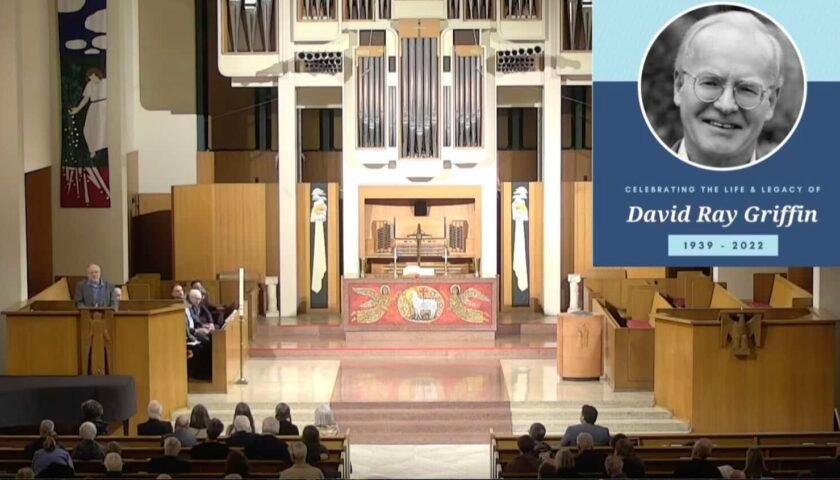
David Ray Griffin
Ed Asner
Elias Davidsson
Ellen Mariani
Ferdinando Imposimato
Francis A. Boyle
Frank Legge
George Capsis
Giulietto Chiesa
Graeme Macqueen
Greg Longo
James Hufferd
Jane Pollicino
Janette McKinlay
Janice Matthews
Ted Muga
Tod Fletcher
Vic Sadot
Victor Thorn
William Hurt
William Pepper
Jason Bermas: Let’s give it up one more time for those who are no longer with us.